Driving Strategy Through User Insights
From Persuading to Empowering, but Always User-Focused
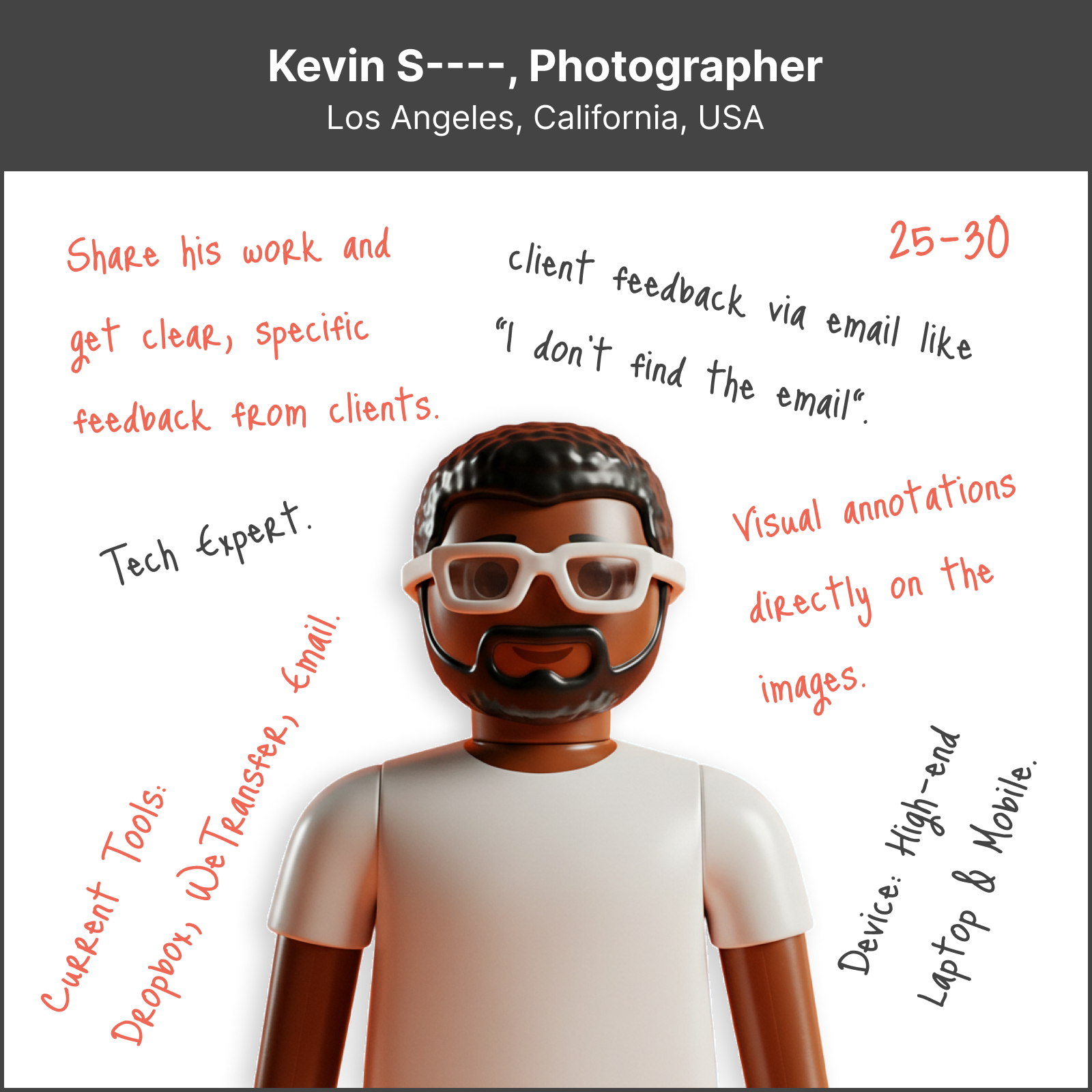
In my role of understanding the user, I drew a parallel between the UX Persona methodology and my previous experience in advertising. An advertising brief seeks to understand the consumer to persuade them. In UX, however, the goal was to understand the user to empower them with solutions. I mention this because I believe that this prior communication experience not only helped in defining people's needs but also in better understanding the importance of the product itself and its mission to offer the best concrete solutions to users.
The Power of Active Listening
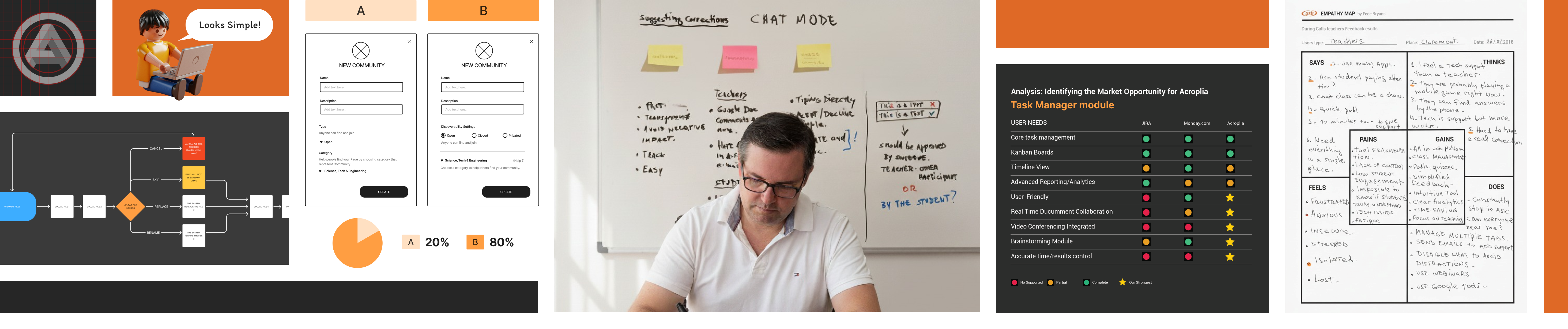
When we started the project, we created questions to address our initial idea, common needs, and limitations. As we structured the project, we organized specific surveys, covering doubts and identifying potential user needs for each feature. Initially, my client and I would prepare key questions before each interview, but the most important rule for me was to listen, especially in the early stages. By prioritizing active listening, we discovered answers to questions we hadn't thought to ask. These unexpected discoveries gave rise to some of Acroplia's most unique and valuable features.
Resourcefulness and Competitive Analysis
With a tight budget, we leveraged the client's network in California to conduct our first rounds of interviews with schools and student groups, proving that valuable research is built on curiosity, not just resources. Of course, as part of the investigation, we also conducted passive research by analyzing software or sites that offered services similar to what we were going to offer, with the clear intention of improving upon them.
The Evolution of the Target Audience
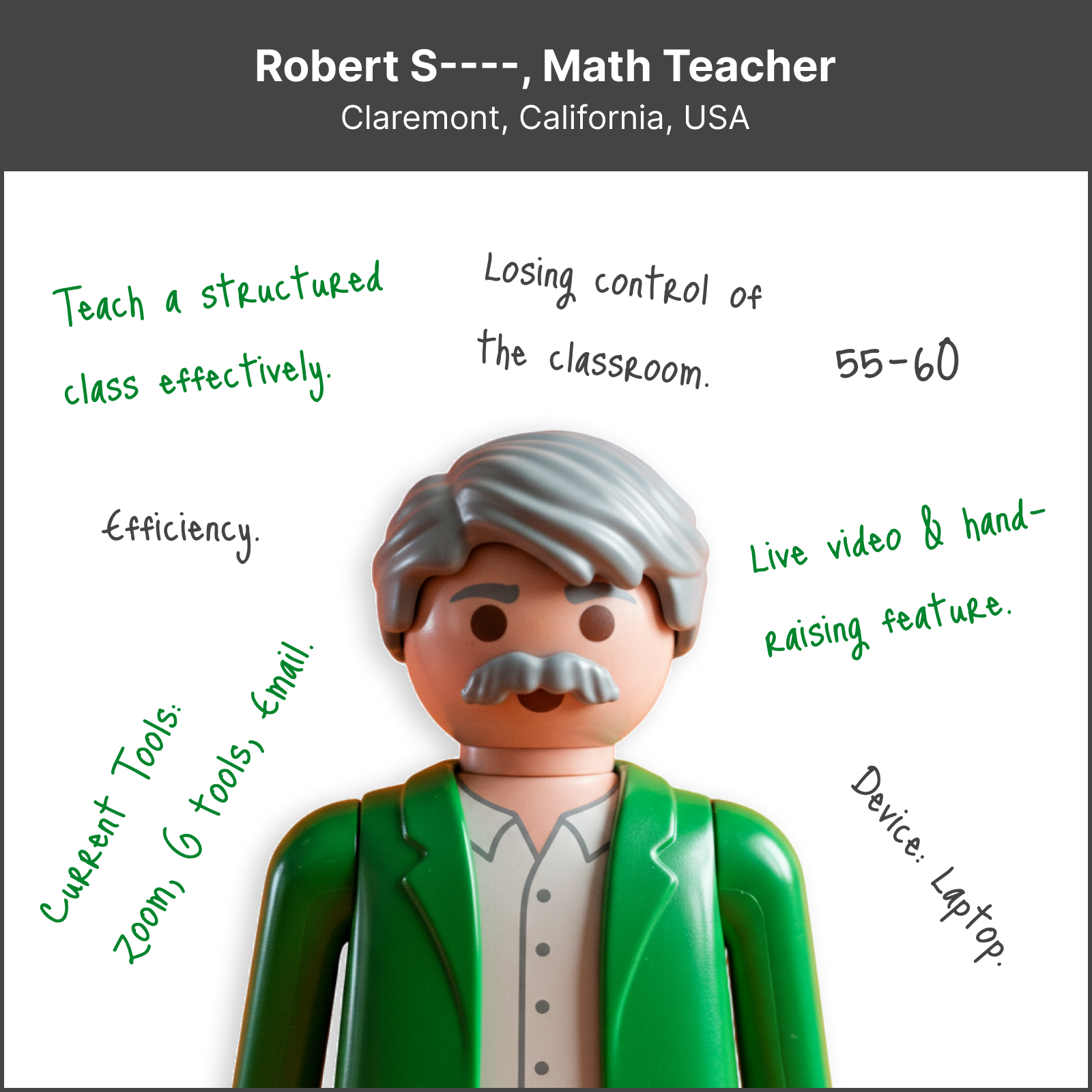
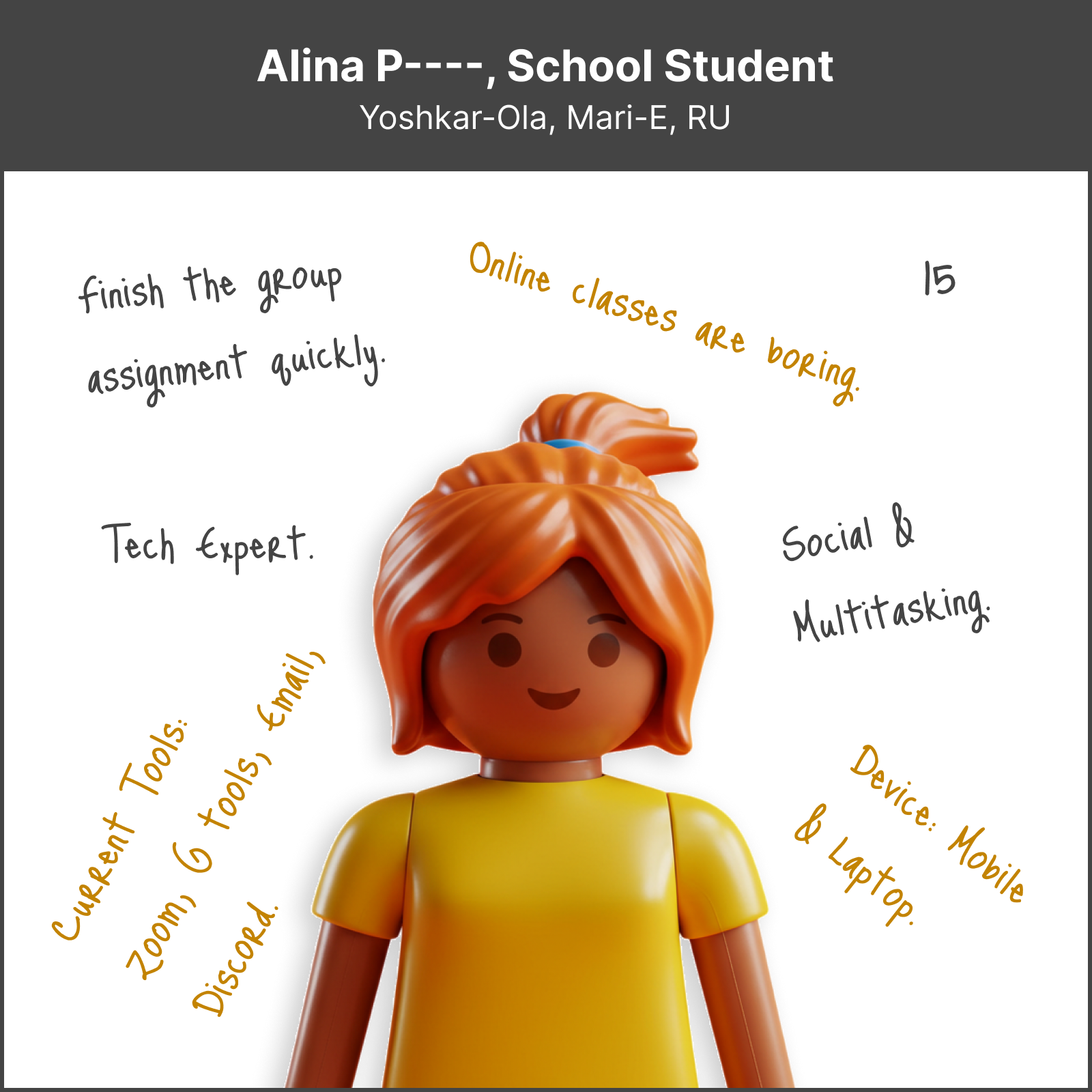
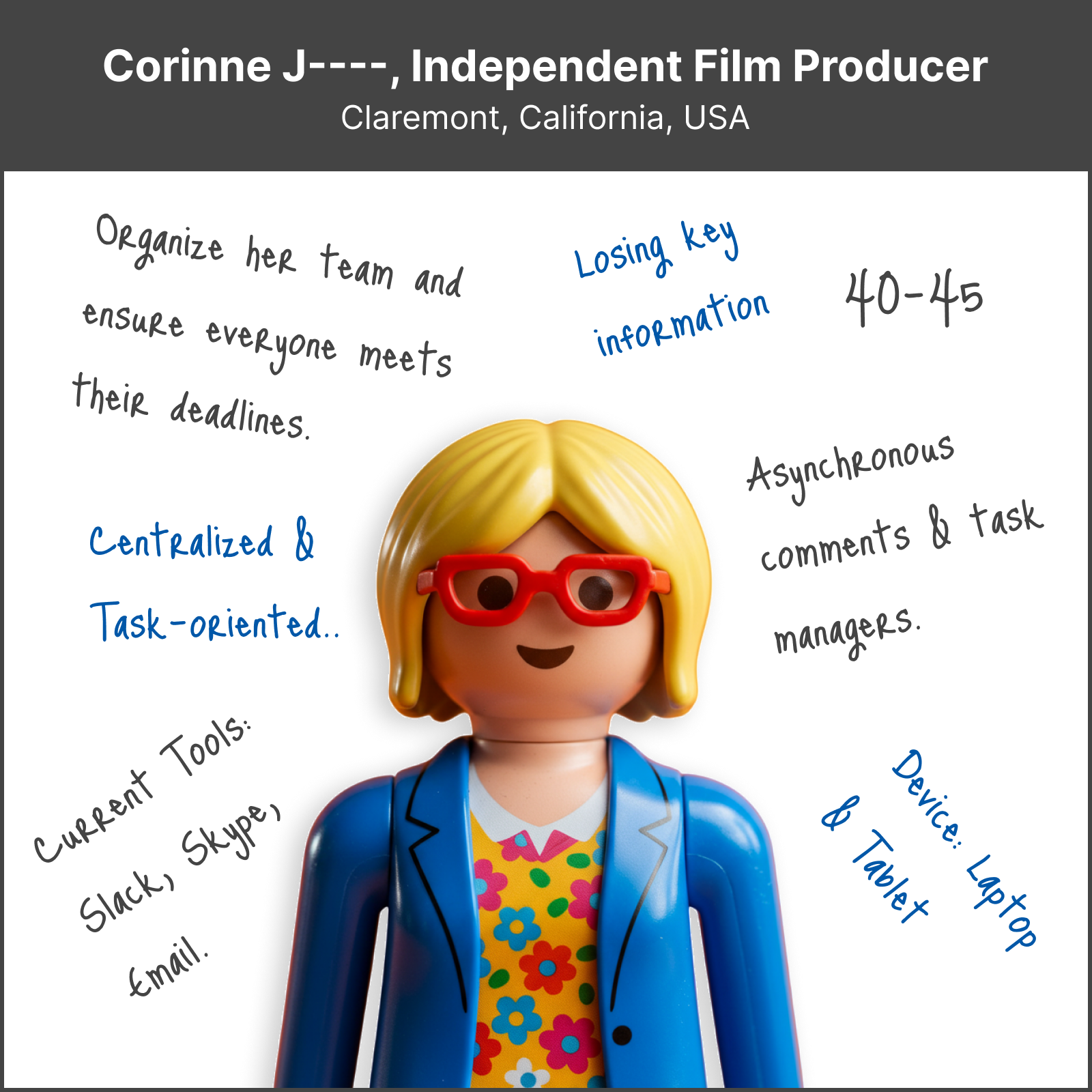
The first step, then, was to analyze the needs of people in the education sector in both California and Yoshkar-Ola, focusing our surveys on educators, students, and content creators. Later, with the change in strategy, we added another group of people who required a similar, though not identical, interaction. Therefore, we included people who worked on group projects, both professionally and recreationally.
Team Cohesion and Internal Feedback
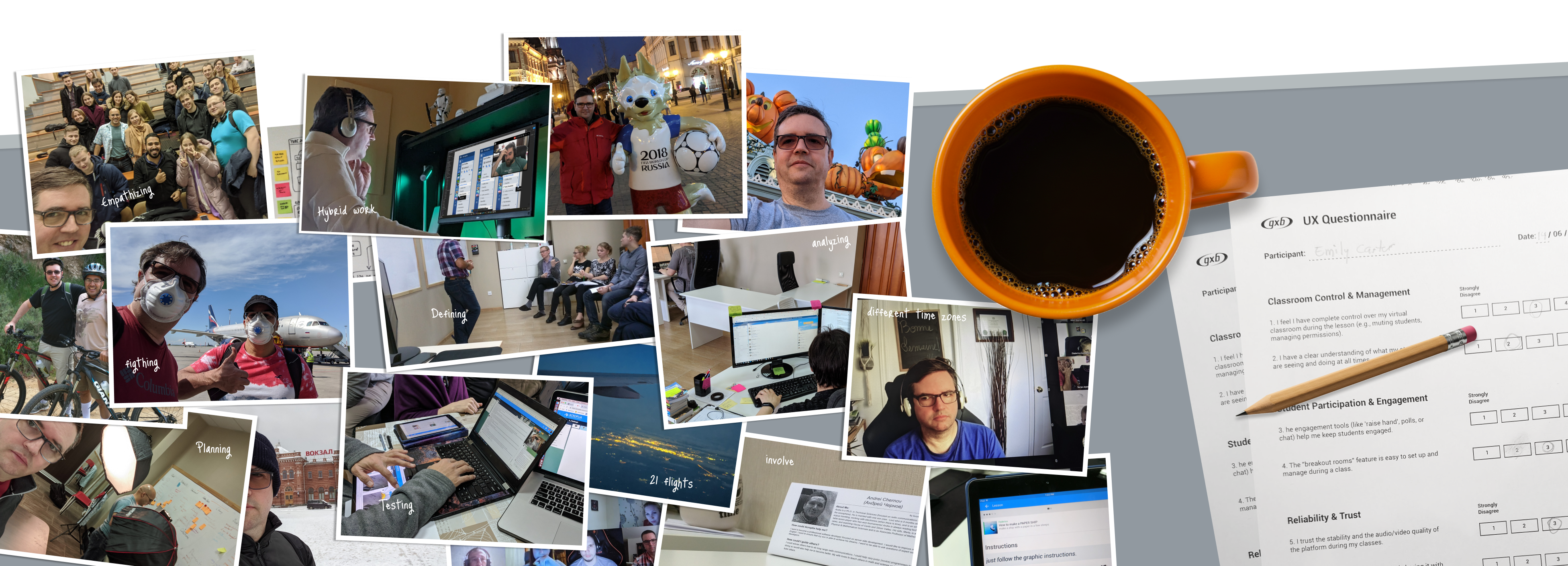
The persona study was also reinforced by the participation of the entire GXB team. Each member had to project a possible use case for our software according to their profile. This helped everyone better understand the project we were working on, even those less involved in development tasks. This gave us the dual benefit of also getting feedback and better communicating our objectives to all project members, making them part of the process.