I've created this section so you can get to know a bit more about me, my career, and the perspective I bring to each project. I was born and raised in Buenos Aires, that vibrant "Europe of South America" which is a cultural powerhouse of design, art, and cinema. Today, the script has changed a bit, and I live in the tranquil outskirts of Montreal, but I still channel that creative and curious energy into my work and my passions, like photography and cycling.
That way of seeing the world is what has led me on a journey of professional evolution. My training as a visual communication technician and graphic designer gave me the language to speak with images. My experience as a video game art director and in founding my own advertising agency was an intensive masterclass in strategy: there, I learned to align creativity with business objectives and, above all, to focus on the receiver of the message to truly connect with the end audience.
My move into UX/UI design was, therefore, a natural evolution. To formalize it, I delved into the discipline through self-study and with UX courses, finding the learning process incredibly friendly thanks to that prior foundation. Today, all those pieces fit together. My work is about applying this integrated perspective: I use my strategic vision to define the real problem, my designer's sensibility to create intuitive interfaces, and that communicator's empathy to ensure that every solution is valuable to the person using it.
The Ant's Philosophy
How founding and working at Strong Advertising taught me that the best results come from balancing the client's objectives with the user's or consumer's needs. Advertising persuades, UX solves problems. The common link is the research of that target.
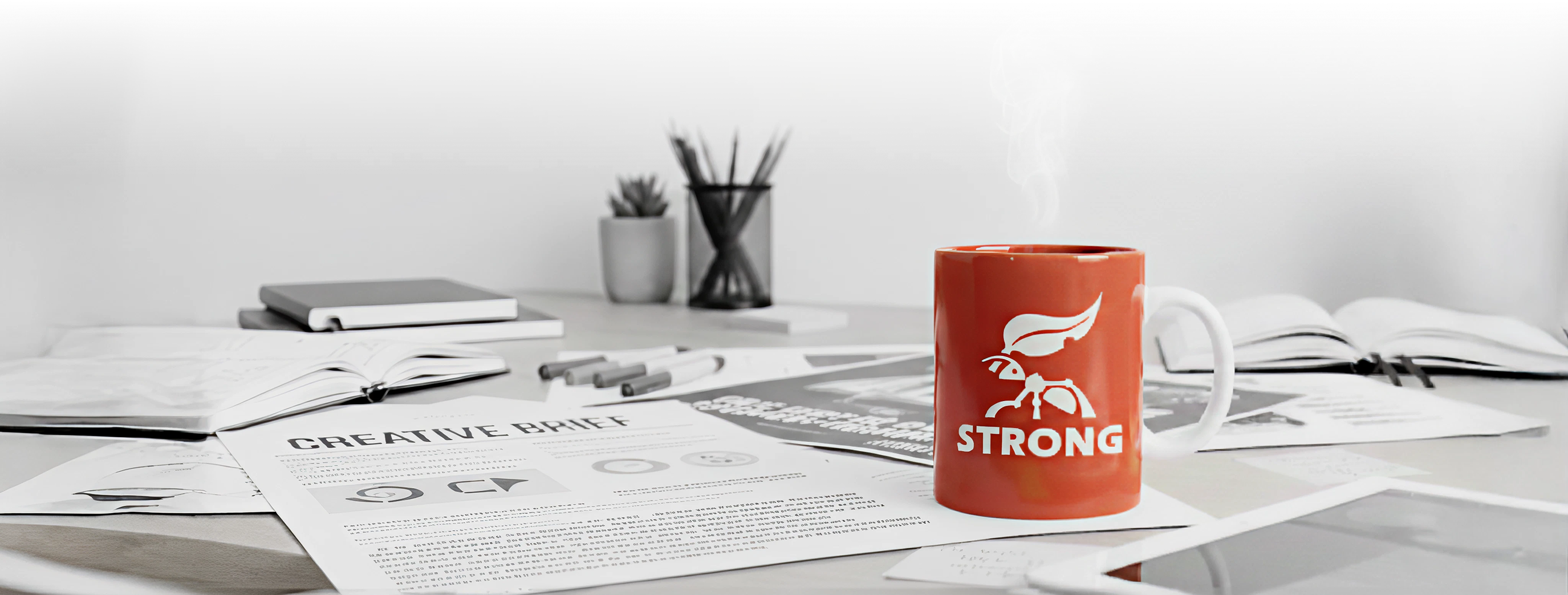
It would be unfair not to dedicate a few lines to my time at Strong Advertising in Argentina. When I founded the agency with my partner, a graduate in advertising, I decided our logo would be an ant carrying a leaf. Why? Because it symbolized our essence: strength, teamwork, and the ability to achieve results that surpassed our size. I brought the visual communication and design; he brought the advertising strategy. Together, we were those two ants with immense drive—a synergy that I now understand as the perfect balance between the interface (UI) and the user strategy (UX).
More than an agency, Strong was the laboratory where I put into practice the delicate balance between the client's needs and their consumer's desires. It was there that the advertising Brief evolved to become my first approach to what I now call building Personas in the UX world. Every project, whether for small businesses like Camelot Comic Store and Grintec or for corporations like NCR, Sky TV, or Unilever, required me to research my clients' customers, understand their motivations, and design messages and visuals that truly connected with them.
The fundamental lesson I took from Strong is simple: a great solution isn't just one that looks good, but one that works for the business because it first worked for its user or customer.
Beyond Skills: Attitude, Responsibility, and Confidence
Three moments from my professional life that I consider valuable and that I would like to share: the attitude to take initiative, the responsibility to own the results, and the ability to inspire the confidence of others.
The Cato Logo: An Unexpected Ticket to the Antipodes
How a 24-hour logo design challenge for one of the world's most important studios became an opportunity to learn from the best designers in the world.
Early in my career as a graphic designer, amidst the excitement of seeking new opportunities in beautiful Buenos Aires, I applied for a position at the Argentine branch of Cato Design—at the time, one of the most important design studios in the world.
During the interview, however, there was a catch: "Do you know how to use a Mac?" As a PC user, I felt my chance for a permanent position fading away; knowing Mac was a dealbreaker back then.
But fate took an unexpected turn. Gonzalo Berro, the interviewer and partner at the studio, proposed a challenge: "We’ve been struggling for months with a client’s logo. We can't seem to finalize it because the client won't approve anything. Do you think you can help us create something by tomorrow?"
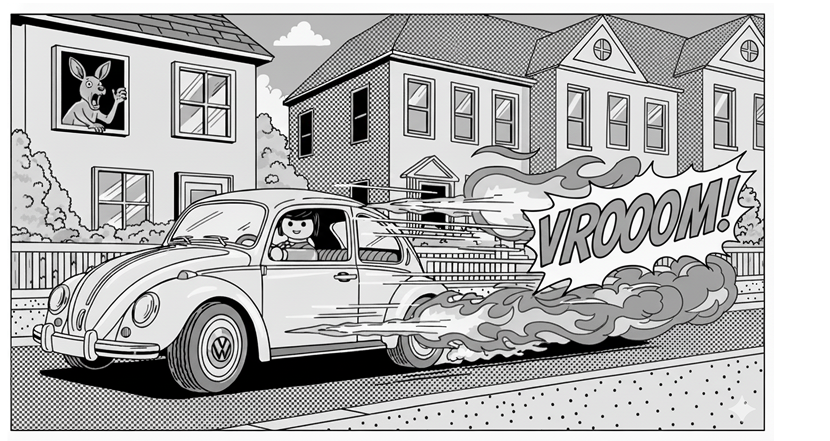
It was already past 3:00 PM. In an instant, my 1962 VW became my personal rocket ship, speeding straight to my PC. With only 24 hours and the pressure of proving my worth to a top-tier global studio, I knew my bed would have to wait; coffee would be my faithful ally that night.
The next day, I presented three logo proposals, each with a solid conceptual justification. I admit I was a bit nervous; I felt my designs lacked polish, but their conceptual strength was undeniable. Gonzalo shook my hand, thanked me for the effort, and I went home with that strange mix of hope and uncertainty floating in the air.
The following week, a call broke the silence. The news was a balm: one of my three logos had sparked enthusiasm in the studio and, with a few tweaks, the client had approved it!
Two paths opened up before me: receive payment for the logo or fly, almost for free, to the prestigious IDEAS 95 design conference in Melbourne, Australia. The choice, of course, was as obvious as the sunrise. Australia and its kangaroos were waiting for me!
I was lucky enough to meet Ken Cato himself. I was even offered opportunities locally to give talks at the University of Buenos Aires—an offer I sadly rejected. I was very young, and the idea of public speaking terrified me.
I share this story not because I believe my logos were masterpieces, but to illustrate how a positive, proactive attitude can completely rewrite the script of reality. From looking for a job to traveling to Australia to absorb knowledge from the greats of global design—all for giving my pillow the night off.
The Thin Line Between the Podium and Nothingness
The story of how taking individual initiative on a video game concept pitch resulted in the company's largest and most significant contract to date.
My career in the world of video games already had a few levels under my belt. At Sabarasa Entertainment, I was the art director for Mazes of Fate on the Gameboy Advance. After completing that project, my path led me to QB9, another video game company, for a game called ZoomBook, also as art director.
Shortly after, Javier, the owner of Sabarasa Entertainment, made me an offer I couldn't refuse: to come back and work on the Nintendo DS version of Mazes of Fate.
But the company I returned to was quite different. From that initial team of 5, Sabarasa had grown to occupy 3 offices with about 60 employees. I felt like a "rookie" all over again, despite having been part of its foundation.
One day, Javier threw out a challenge: who would dare to design a video game concept to present to investors in the U.S.? At that moment, I tried to join two groups that were already developing ideas, but I was met with closed doors; they were somewhat cliquey groups. Finding no room for me, I decided to embark on the creative journey alone.
I drew on my gaming experience, summoning those games that had stolen hours of sleep from me due to how addictive they were. The challenge was to create a game for the Nintendo Wii, so my focus was to devise something that leveraged its innovative interface, ensuring, of course, originality and a lot of fun to make the game competitive.
I worked diligently during the month before Javier's trip to polish my proposal. Martin Repeto, my office mate and a generous soul, lent me an invaluable hand, helping me transform my sketches and those of Carlos Cabrera, a very talented artist, into 3D models.
With my idea ready and well-detailed, it joined the handful of proposals that Otaegui would take to conquer America.
The following week, Javier returned with news that thrilled us: one of the proposals had been bought by Real Networks, and it turned out to be mine! This project became the largest Sabarasa had secured to date, both in complexity and revenue.
I wanted to share this experience because, while I must confess I didn't feel entirely good about not being able to join those other groups (I generally prefer the strength of a team), I made the decision to try it on my own.
The "You can do it" attitude, so ingrained in North America, is a phrase that truly inspires. And this experience ingrained an invaluable lesson in me: the only thing that gets you to "you can do it" is the act of trying. People often don't realize how thin the line between achieving a goal and not can be.
Just Say Yes
How I took on an unfamiliar Project Leader role to rescue a troubled project, learning on the fly and delivering it successfully, making up for lost time.
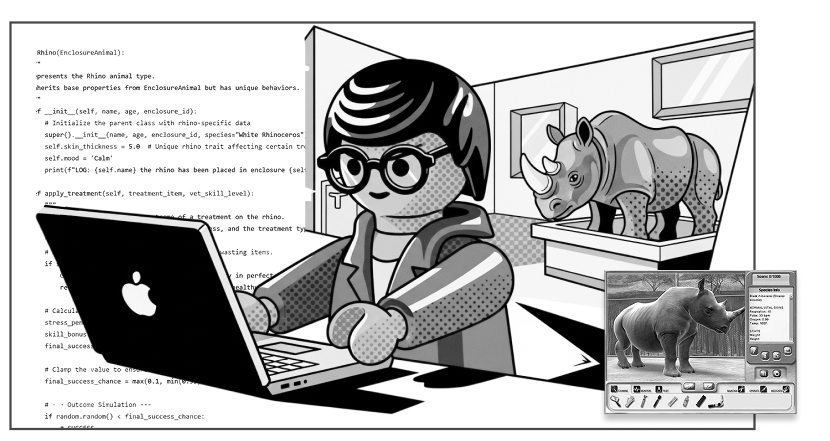
A few months before leaving my native Argentina to settle in my new home, Canada, Javier Otaegui (from Sabarasa, of course) reached out to me: he recommended me for a Project Leader position for a video game called ZooVet 2.
Lucas, the owner of Zetenta.com, a prestigious web development and digital marketing company, proposed that I help him with a project that had been running into some trouble, and on Javier's recommendation, he was inviting me to join.
My initial reaction was to decline honestly: I told Lucas that I had never been a project leader, that I didn't have the training. And I certainly didn't know how to lead a programmer—I didn't understand a thing about code!
He insisted, but I genuinely didn't feel up to the task. I perceived a considerable risk of doing a poor job, so my "no" was quite firm. After a brief but tenacious back-and-forth, Lucas hit me with the key line: "I trust that you'll be able to do it. I'll pay you double what I offered if you accept."
Hmm... that, I must admit, threw me off completely. I found it incredibly difficult to say no, and it wasn't just about the money; that man was truly trusting me. So I proposed: "Okay. We can try it for a week." He shook my hand with a smile, as I felt my own palm begin to sweat. "What am I doing?" I thought, "I just said yes."
Many things happened on that project. I vividly remember the first day when Lucas put me in front of a screen full of code and said: "In 3 days, you should understand where every part of the game is." I felt like I was facing an indecipherable hieroglyph, but, by some sort of magic, on the third day, I got it! I had understood and located every piece and felt I had a good grasp on it.
As I predicted, it was not an easy task. There were difficult decisions to make, including the sad necessity of having to let someone go. But the most amazing thing of all is that the game was finished within the established deadlines. And while my involvement was significant, I was lucky to have a professional and deeply committed team. It was one of those cases where all the gears worked in perfect sync once the root problems were solved.
Lucas, a man of few words—professional, demanding, and someone who inspires respect—sent me an email when we finished the project. A warm thank you for accepting the challenge, with a detail that surprised me: he congratulated me because it was the first time, up to that point, that a project of that magnitude had been completed without complications or delays in the company.
Lucas's insistence was a push that helped me break down barriers. As I said before, we formed a great team, and the key to success was excellent communication, a collaborative spirit, and above all, the confidence that we were all giving our all for the project's success. That's where a large part of success comes from.